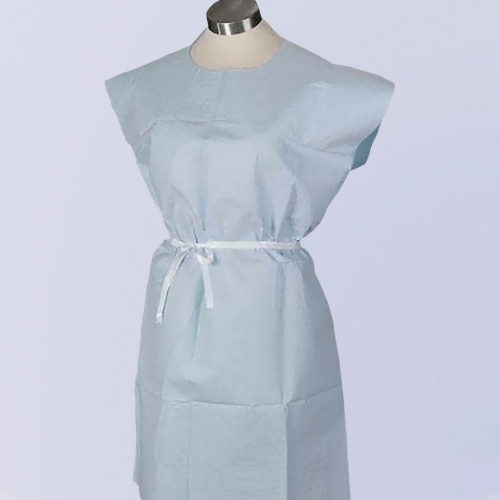
Why Disposable Isolation Gowns Remain a Critical PPE Category
Isolation gowns are the frontline barrier between healthcare workers and potentially infectious materials — blood, body fluids, secretions, and contaminated surfaces. Unlike surgical gowns, which are designed for sterile operative environments, isolation gowns serve a broader range of clinical scenarios: patient examination, wound care, laboratory work, housekeeping in clinical areas, and outbreak response.
The global healthcare landscape has reinforced the importance of reliable isolation gown supply chains. Facilities that experienced stockouts during peak demand periods learned a costly lesson: PPE procurement cannot be an afterthought. A well-managed isolation gown program balances daily consumption rates, safety stock levels, and supplier reliability to ensure that every shift has adequate coverage.
For B2B buyers — hospital procurement directors, group purchasing organizations (GPOs), and medical supply distributors — the challenge is finding the right specification at the right price point without compromising on barrier integrity or regulatory compliance.
Material Types: PP vs. SMS vs. Microporous Film
The material construction of a disposable isolation gown determines its barrier performance, breathability, durability, and cost. Understanding the trade-offs helps buyers match the right material to the intended use case.
PP (Polypropylene) Spunbond Gowns
PP spunbond is the most economical option. Made from continuous polypropylene filaments bonded thermally, these gowns provide basic liquid barrier protection suitable for low-risk tasks such as patient visits, food service in healthcare settings, and general housekeeping. Typical GSM (grams per square meter) ranges from 20 to 35. While cost-effective, PP spunbond gowns have limited resistance to fluid penetration under pressure and are not suitable for procedures involving significant fluid exposure.
SMS (Spunbond-Meltblown-Spunbond) Gowns
SMS fabric combines the strength of spunbond layers with the filtration and barrier properties of a meltblown middle layer. The result is a gown that offers superior fluid resistance, bacterial filtration, and particle barrier performance compared to standard PP. SMS gowns are the workhorse of clinical environments — used in ICUs, emergency departments, isolation wards, and during infectious disease protocols. GSM typically ranges from 35 to 55, with higher GSM providing enhanced durability for longer procedures.
Microporous Film-Laminated Gowns
For the highest barrier requirements, microporous PE-film laminated gowns provide a continuous liquid barrier that resists penetration even under sustained fluid exposure. These are used in high-risk clinical scenarios and hazardous material handling. The trade-off is reduced breathability, which can impact wearer comfort during extended use.
Matching Gown Specifications to Clinical Risk Levels
Not every clinical task requires the same level of protection. Over-specifying leads to unnecessary cost and wearer discomfort; under-specifying puts staff at risk. Here is a practical framework for matching gown performance to risk level:
- Minimal risk (Level 1): Basic PP gowns (20-25 GSM). Suitable for standard care, visitor gowns, food service, and non-clinical areas of the facility.
- Low risk (Level 2): Mid-weight PP or light SMS gowns (25-35 GSM). Used for blood draws, IV insertion, suturing in non-sterile settings, and laboratory work with minimal splash risk.
- Moderate risk (Level 3): SMS gowns (35-45 GSM). Appropriate for arterial blood draws, trauma care, emergency room procedures, and situations where fluid splash is possible but not sustained.
- High risk (Level 4): Heavy SMS or microporous laminated gowns (45-55+ GSM). Required for infectious disease protocols, procedures with high fluid exposure risk, and hazardous material handling.
Procurement teams should work with clinical leadership to establish a matrix of tasks and corresponding gown specifications. This ensures that each department orders the right gown for its needs, avoiding both over-procurement of premium gowns and under-protection in high-risk areas.
Sizing, Comfort, and Wearer Compliance
Even the best-performing gown fails if staff refuse to wear it properly. Comfort factors that influence compliance include:
- Breathability: SMS fabrics offer better air permeability than microporous films, reducing heat buildup during extended wear. Look for gowns with a moisture vapor transmission rate (MVTR) of at least 2,000 g/m²/24h for clinical use.
- Range of motion: Raglan sleeve construction and gusseted shoulders allow full arm movement without restricting the wearer — critical for procedures requiring precision and dexterity.
- Secure closure: Neck ties and waist ties should be long enough to accommodate all body sizes, with secure knot-holding ability. Some gowns feature hook-and-loop or snap closures for faster donning and doffing.
- Size availability: Ensure your supplier offers a full size range (S through XXL or 3XL). Stocking only one-size-fits-most gowns leads to gaps in coverage — too-small gowns compromise barrier integrity, and too-large gowns create snag hazards.
"The best PPE is the PPE your staff will actually wear. Comfort isn't a luxury — it's a compliance requirement."
Regulatory Compliance and Quality Standards
Disposable isolation gowns must meet recognized quality and safety standards. Key regulatory frameworks include:
- ISO 13485: Quality management system for medical device manufacturers. Suppliers with ISO 13485 certification demonstrate consistent quality processes from raw material sourcing through final inspection.
- CE Marking (EU MDR): Required for gowns sold in the European Economic Area. Indicates compliance with European health, safety, and environmental protection standards.
- FDA Registration: Isolation gowns marketed in the United States should be FDA-registered as Class I or Class II medical devices, depending on intended use and barrier claims.
- AAMI PB70: While primarily a surgical gown standard, AAMI PB70 liquid barrier classification (Levels 1-4) is increasingly referenced by purchasers specifying isolation gowns for clinical use.
- EN 13795: European standard for surgical drapes, gowns, and clean air suits, covering performance requirements and test methods.
- EN 14126: Performance requirements and tests for protective clothing against infective agents, including resistance to blood-borne pathogens.
When evaluating suppliers, request copies of test reports, certificates, and audit findings. Reputable manufacturers maintain these documentation and can provide them promptly during the qualification process.
Procurement Best Practices for Bulk Buyers
For organizations purchasing isolation gowns at scale, these practices help optimize cost, quality, and supply continuity:
1. Standardize Specifications Across Facilities
Multi-site healthcare systems should standardize on a limited set of gown specifications — typically two or three SKUs covering low, moderate, and high-risk use cases. Standardization reduces procurement complexity, improves negotiating leverage with suppliers, and simplifies staff training.
2. Negotiate on Total Cost, Not Unit Price
A gown that costs $0.15 less per unit but tears during donning or fails to meet barrier specifications generates hidden costs through wasted product, compromised safety, and potential incident reports. Evaluate total cost per successful clinical use, not just the price tag.
3. Maintain Safety Stock and Dual Sourcing
The 2020-2022 PPE supply chain disruptions demonstrated the risk of single-source procurement. Maintain at least 60 days of safety stock for critical gown specifications and qualify at least two approved suppliers for each product category. Newrise Medical supports dual-sourcing arrangements with consistent specifications across production batches.
4. Request Samples Before Committing to Volume Orders
Always evaluate physical samples before placing large orders. Test for fabric strength (tensile and tear resistance), fluid barrier performance, seam integrity, closure security, and wearer comfort with actual staff feedback. Newrise Medical provides free samples for evaluation — contact us with your specifications.
5. Plan for Seasonal Demand Fluctuations
Respiratory illness seasons (typically October through March in the Northern Hemisphere) drive significantly higher gown consumption. Place volume orders 8-12 weeks ahead of peak season to ensure availability and avoid spot-market pricing premiums.
OEM and Custom Packaging Options
For distributors and private-label buyers, Newrise Medical offers comprehensive OEM services:
- Custom branding: Your logo, product name, and design on individual packaging and master cartons.
- Custom packaging configurations: Individual poly-bag packing, 50-piece dispenser boxes, or bulk carton packing — configured to match your distribution model.
- Custom GSM and sizing: Material weight and dimensions tailored to your market requirements.
- Regulatory documentation support: Assistance with technical files, test reports, and certification documentation for your target markets.
Conclusion
Disposable isolation gowns are an essential component of healthcare infection control, but selecting the right specification requires balancing multiple factors: barrier performance, comfort, compliance, and cost. By standardizing on proven materials, working with ISO-certified manufacturers, and maintaining diversified supply chains, procurement teams can ensure their facilities are always equipped with reliable, cost-effective PPE.
Newrise Medical has been manufacturing disposable isolation gowns since 2004, with ISO 13485 certified production and a track record of consistent quality across millions of units shipped worldwide. Contact us for product specifications, free samples, and volume pricing.