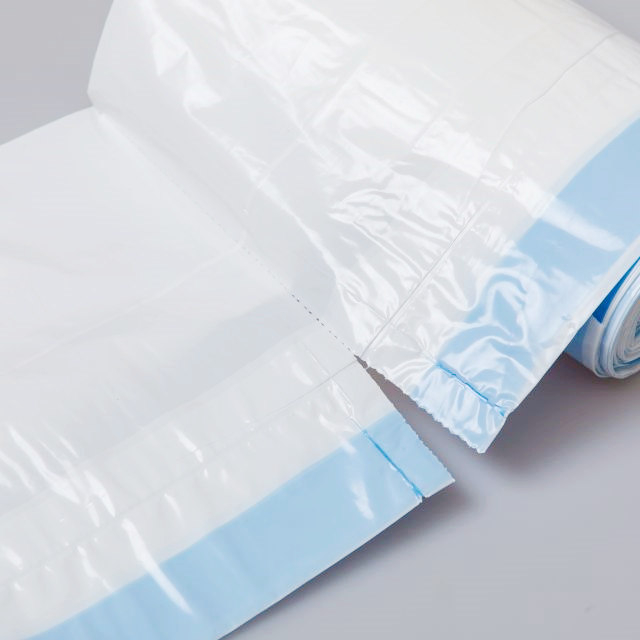
If you asked healthcare workers which product makes the biggest daily difference in ward hygiene, bedpan liners might not top the list. They rarely get discussed in procurement meetings the way isolation gowns, surgical drapes, or incontinence products do. But behind the scenes, disposable bedpan liners quietly do three things that matter enormously: they reduce cross-contamination risk, streamline nursing workflows, and protect patient dignity during one of the most vulnerable moments of hospitalization.
This article explains why bedpan liners deserve more attention from procurement teams — and what to look for when sourcing them.
What Is a Disposable Bedpan Liner?
A disposable bedpan liner is a thin, flexible insert that fits inside a standard reusable bedpan or urinal. Made from absorbent nonwoven material with a waterproof backing, it serves as a single-use barrier between patient waste and the bedpan surface. After use, the liner — containing the waste — is lifted out and disposed of, leaving the bedpan itself relatively clean.
Most quality bedpan liners feature:
- Nonwoven absorbent top layer — quickly absorbs liquid waste and minimizes splashing during transfer
- Waterproof PE backing — prevents leakage through the bottom of the liner, protecting the bedpan surface
- Universal fit design — shaped to accommodate standard hospital bedpans and urinals across multiple brands and sizes
- Individually wrapped packaging — maintains hygiene until the moment of use
The concept is straightforward, but the impact on clinical operations is substantial.
The Infection Control Case for Bedpan Liners
Reusable bedpans are notorious infection control challenges. Even with thorough washing and disinfection protocols, hard-to-reach crevices can harbor pathogens between uses. Studies on healthcare-associated infections (HAIs) have repeatedly identified shared equipment — including bedpans and wash basins — as potential reservoirs for organisms like C. difficile, MRSA, and VRE.
Disposable bedpan liners address this problem at its source:
Reducing Direct Contamination
When a liner is used, the bedpan surface itself never comes into direct contact with patient waste. This means the bedpan stays cleaner between patients, reducing the bioburden that cleaning staff must manage and lowering the risk that residual pathogens survive the cleaning process.
Simplifying Cleaning Protocols
Without liners, every bedpan use requires a full wash-and-disinfect cycle — either manual scrubbing with chemical disinfectants or a mechanical bedpan washer cycle. With liners, the bedpan requires only a quick wipe-down between uses, saving time, water, and chemicals while maintaining higher hygiene standards.
Protecting Healthcare Workers
Nursing assistants and environmental services staff who handle soiled bedpans face significant exposure risk. By containing waste within a disposable liner, these workers have less direct contact with potentially infectious material. Fewer exposure events mean fewer occupational health incidents — a meaningful improvement for staff morale and safety.
Key takeaway: Disposable bedpan liners are not a replacement for proper bedpan hygiene — they are a first-line barrier that makes every subsequent cleaning step easier, faster, and more effective.
The Patient Dignity Factor
Healthcare is not just about clinical outcomes. It is about the experience of the person in the bed — and few moments are more undignifying than needing a bedpan. Disposable liners improve that experience in tangible ways:
- Warmer surface contact. Nonwoven liners are softer and warmer than bare plastic or metal bedpans, reducing the shock of cold contact during use.
- Less odor. The absorbent layer helps contain and mask odors more effectively than a bare bedpan surface.
- Faster turnover. With liners, nurses spend less time cleaning and more time on direct patient care, reducing the wait time between patients who need assistance.
These details matter. A patient's perception of care quality is shaped by exactly these kinds of small, repeated interactions.
Cost Analysis: Disposable Liners vs. Manual Cleaning
The economics of disposable bedpan liners are favorable for most facilities when the full cost picture is considered:
| Cost Factor | Without Liners | With Liners |
|---|---|---|
| Per-use consumable cost | $0 (cleaning chemicals) | Low (liner unit cost) |
| Staff time per bedpan | 3–5 min wash + disinfect | 30 sec liner removal + wipe |
| Chemical and water costs | Significant per cycle | Minimal |
| Bedpan washer depreciation | High (frequent cycles) | Low (occasional deep clean) |
| HAI risk reduction | Baseline | Improved |
When staff time, chemical costs, equipment wear, and infection prevention are factored in, the total cost of using disposable liners is often lower — and the clinical benefits are clear.
Choosing the Right Bedpan Liner
Absorbency
Higher absorbency means better containment and less leakage risk. For general ward use, standard absorbency is adequate. For intensive care or high-volume situations, look for liners with enhanced absorbent core layers.
Fit and Compatibility
Not all bedpans are the same size. Ensure your liner supplier offers liners that fit the specific bedpan models used in your facility. Universal-fit liners work with most standard designs, but always verify before placing a bulk order.
Packaging
Individually wrapped liners are essential for ward-level infection control. Bulk-packed liners (loose in a box) are cheaper but require staff to handle multiple units at once, increasing contamination risk during dispensing.
Environmental Considerations
While disposable liners do add to clinical waste volume, the trade-off against water and chemical use from repeated bedpan washing should be evaluated. Some manufacturers are exploring biodegradable nonwoven options — an area worth monitoring as sustainability requirements tighten.
Related Products for a Complete Infection Control Strategy
Bedpan liners work best as part of a broader single-use hygiene ecosystem. Consider pairing them with:
- Disposable commode liners — the same barrier principle, adapted for bedside commode chairs
- Male urinal bags — single-use bags that attach directly to urinal bottles for contained, hygienic disposal
- Disposable wash gloves and pre-soaped wash mitts — for complete bedside hygiene without shared wash basins
- PE aprons — to protect staff during bedpan handling and bedside care
Together, these consumables create a closed-loop hygiene system that minimizes cross-contamination points and simplifies daily clinical workflows.
Why Newrise Medical for Bedpan Liners?
Changzhou Newrise Medical manufactures disposable bedpan liners and a full range of related infection control consumables, backed by ISO 13485 certification and CE marking. Our bedpan liners offer:
- Consistent quality — uniform absorbency and reliable waterproof backing on every unit
- Universal fit — designed to work with standard hospital bedpans and urinals
- Individually packaged — each liner sealed for hygiene until point of use
- OEM/ODM options — custom sizing, branding, and packaging configurations available
- Proven export experience — serving distributors and hospitals in 40+ countries since 2004
Whether you need a trial order for evaluation or a long-term supply contract for a hospital group, our production capacity and quality systems are built to deliver consistently.
The Bottom Line
Disposable bedpan liners are a small product with a big impact. They reduce infection risk, save nursing time, protect staff, and make patients more comfortable. They cost very little per unit but deliver measurable operational and clinical benefits.
In an era where healthcare facilities are under constant pressure to improve outcomes while controlling costs, products like bedpan liners are easy wins. They do not require training programs or capital investment. They just work — quietly, reliably, every single time.
If your facility is not already using disposable bedpan liners, it may be time to ask why.