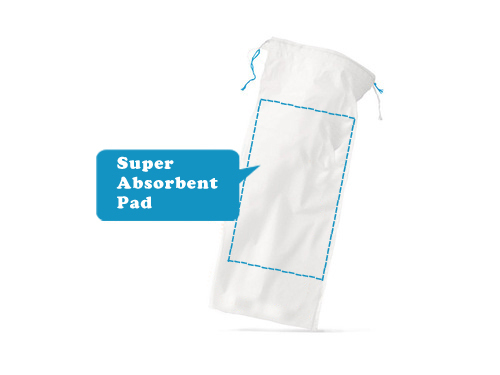
Male urinal bags are one of those essential healthcare products that rarely make headlines but quietly shape the daily experience of millions of patients and caregivers. Whether in a busy hospital ward, a nursing home with dozens of residents requiring mobility assistance, or a home care setting where family members provide round-the-clock support, the quality and design of urine collection equipment directly impacts hygiene, dignity, and caregiver workload.
Disposable male urinal bags have evolved significantly from their basic predecessors. Today's products combine ergonomic design, leak-proof construction, and infection-control features that make them a critical component of the broader incontinence care ecosystem — alongside products like disposable underpads, commode liners, and bedpan liners.
The Clinical Case for Disposable Urinal Bags
Infection Prevention
Reusable urinal bottles are a well-documented cross-contamination vector. Studies have shown that inadequately cleaned urinals can harbor pathogens including E. coli, Klebsiella, and Pseudomonas — organisms that are particularly dangerous for immunocompromised patients, post-surgical patients, and elderly residents in long-term care.
Disposable urinal bags eliminate this risk entirely. Each use involves a fresh, sealed product. After use, the bag is tied and disposed of — no cleaning, no residual contamination, no biofilm buildup.
Patient Dignity
The psychological dimension of incontinence care is often underestimated. Patients who rely on urinal assistance frequently report feelings of embarrassment and loss of independence. Well-designed disposable urinal bags address this through features like opaque construction (preventing visible contents), odor-control additives, and ergonomic shapes that feel more like a personal hygiene product than medical equipment.
The portability of disposable bags is another dignity factor. Patients can keep one within reach during the night without needing to call for assistance or navigate to a bathroom — reducing anxiety and preserving a sense of autonomy.
Key Design Features
Leak-Proof Construction
Quality disposable urinal bags use heat-sealed seams and reinforced edges to prevent leakage during use, transport, and disposal. The spout or neck area is the most critical design element — it needs to be wide enough for comfortable use yet sealable enough to prevent drips.
Capacity and Graduated Markings
Standard disposable urinal bags hold 1,000-1,500ml, sufficient for a single overnight use for most patients. Graduated volume markings on the bag allow nursing staff to monitor fluid output — an important clinical metric for patients on IV therapy, those with kidney conditions, or anyone on fluid restriction protocols.
Odor Control
Many modern urinal bags incorporate odor-neutralizing agents — either as a powder additive within the bag or as a treated inner film layer. This is particularly important in shared patient rooms and home care environments where odor management affects both patient comfort and the living environment.
Anti-Splash Design
Some products feature an internal anti-splash baffle or funnel-shaped inlet that reduces the risk of splashback. This is a meaningful comfort improvement, especially for patients with limited motor control who may not be able to position the bag precisely.
Where Urinal Bags Are Used
- Hospital wards: General medical and surgical wards, particularly for post-operative patients and those with limited mobility.
- Intensive care units: For patients who are bed-bound or recovering from procedures that temporarily restrict movement.
- Nursing homes and aged care facilities: High-volume, ongoing use for elderly residents with mobility limitations.
- Home care: A growing segment driven by the shift toward aging-in-place and reduced hospital readmissions. Family caregivers increasingly need professional-grade disposable products.
- Emergency departments and ambulance services: For patients awaiting admission or transport who require immediate urine collection.
- Palliative and hospice care: Where comfort and dignity are the primary objectives.
Reusable vs. Disposable: The Comparison
| Factor | Reusable Urinal | Disposable Urinal Bag |
|---|---|---|
| Cross-contamination risk | High (cleaning variability) | None (single-use) |
| Staff time per use | 5-10 min (clean + sanitize) | <1 min (dispose) |
| Odor management | Poor | Built-in odor control |
| Patient dignity | Moderate | High (opaque, portable) |
| Water/chemical use | Significant | None |
"Switching to disposable urinal bags in our 150-bed aged care facility reduced our environmental cleaning workload by an estimated 20 staff-hours per week. The infection control improvement was a welcome bonus — but the time savings were what convinced the board." — Operations Manager, Aged Care Facility, Melbourne
Procurement Considerations
- Request samples for hands-on evaluation. Spout design, seal quality, and material feel are critical factors that can't be assessed from product photos alone.
- Verify material safety. Ensure the plastic film is non-toxic and meets relevant safety standards for medical-use products. REACH and FDA compliance are good indicators.
- Evaluate packaging format. Individually wrapped bags are essential for clinical settings; bulk packaging may be acceptable for home care distributors who repackage.
- Consider volume-based pricing tiers. Urinal bags are high-volume consumables. Suppliers should offer meaningful discounts at case and pallet quantities.
- Check supply chain reliability. Stockouts of urinal bags directly impact patient care quality. Choose manufacturers with proven production capacity and consistent delivery performance.
Environmental Considerations
As with any disposable product, waste management is a consideration. However, the environmental footprint should be evaluated holistically — reusable urinals require significant water and chemical disinfectant use for cleaning, plus energy for hot water systems and ventilation in cleaning areas. The waste stream from disposable urinal bags is relatively clean (primarily polymer film and absorbed urine) and can be managed alongside standard clinical waste protocols.
Some manufacturers are beginning to explore biodegradable or partially bio-based film options for urinal bags. Procurement teams with sustainability mandates should ask suppliers about material innovation roadmaps.
Conclusion
Disposable male urinal bags are a small but critical component of patient-centered care. They protect against infection, preserve dignity, reduce caregiver workload, and provide a simple, reliable solution for urine collection across a wide range of healthcare settings. For facilities still relying on reusable urinals, the transition to disposable alternatives offers immediate benefits with minimal implementation complexity.
Newrise Medical manufactures high-quality disposable male urinal bags with leak-proof seals, graduated volume markings, and odor control features. Produced in our ISO 13485 certified facility. Contact us for samples and pricing →