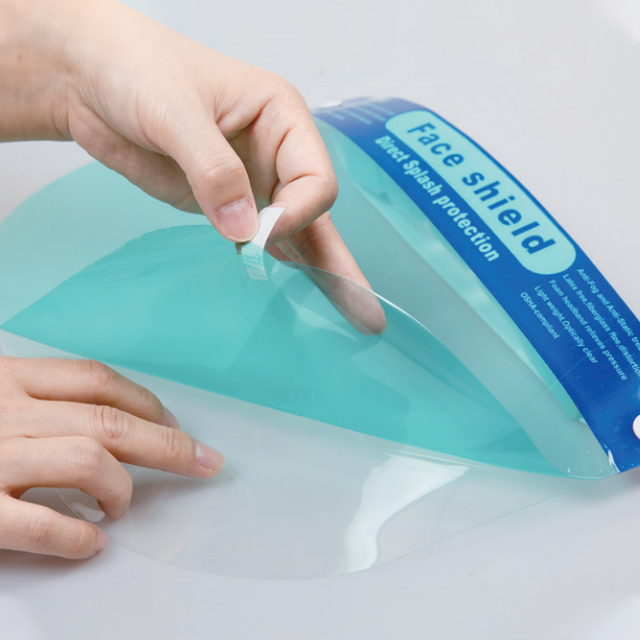
Face shields have become one of the most recognizable pieces of personal protective equipment in modern healthcare. Unlike respirators that filter inhaled air, face shields create a transparent physical barrier that protects the entire face — eyes, nose, and mouth — from splashes, sprays, and large respiratory droplets. They are simple, effective, and indispensable across a wide range of clinical settings.
This guide covers the science behind face shield protection, the specific design features that matter in healthcare environments, and practical procurement advice for facilities that rely on them daily.
Why Face Shields — Not Just Masks
Complementary Protection
Medical face masks and respirators are designed to filter airborne particles entering or leaving the respiratory tract. But they leave the eyes exposed — and the ocular mucosa is a documented route of infection for respiratory viruses. Bloodborne pathogens, chemical splashes, and aerosolized biological material can all reach the eyes and nasal passages around the perimeter of a mask. A face shield closes that gap.
The CDC and WHO both recommend face shields as part of a layered PPE strategy, particularly for procedures that generate splashes or sprays of bodily fluids. In many clinical protocols, face shields are worn in combination with masks rather than as a replacement — each piece addresses a different exposure route.
Splash and Spray Protection
Healthcare procedures that commonly require face shield use include:
- Intubation and extubation: Airway manipulation generates aerosols that can carry infectious agents at high velocity.
- Suctioning: Oral and tracheal suctioning creates unpredictable spray patterns, particularly in emergency settings.
- Dental procedures: High-speed drills, ultrasonic scalers, and air-water syringes produce fine aerosols contaminated with oral bacteria and blood.
- Surgical procedures: Any surgery involving bone cutting, wound irrigation, or fluid-rich tissue creates splash risk.
- Emergency trauma care: Blood and bodily fluid exposure is common in trauma resuscitation, where the speed of care leaves little time for meticulous PPE layering.
- Obstetric deliveries: Amniotic fluid and blood exposure during delivery poses infection risk to attending clinicians.
Design Features That Matter
Anti-Fog Coating
The single most common complaint about face shields is fogging. When a healthcare worker is wearing a warm mask beneath a face shield, exhaled air rises and condenses on the inner surface of the shield, obscuring visibility. In a clinical environment, compromised visibility isn't just inconvenient — it's dangerous. A good anti-fog coating or built-in anti-fog design is essential.
Anti-fog technologies include:
- Hydrophilic coatings: These spread condensed moisture into a thin, transparent film rather than discrete droplets that scatter light.
- Ventilation channels: Some shields incorporate small vents at the top or sides that allow exhaled air to escape upward and away from the shield surface.
- Double-wall construction: An air gap between two shield layers reduces the temperature differential that drives condensation.
Elastic Headband Fit
The elastic headband is the primary attachment method for disposable face shields. A well-designed elastic headband should:
- Accommodate a wide range of head sizes without excessive tightness or slippage.
- Remain secure during head movement — looking down, turning, bending over — without requiring constant readjustment.
- Allow easy donning and doffing, particularly for workers wearing gloves.
- Avoid causing pressure headaches during extended wear, which can reach 8-12 hours in busy clinical shifts.
- Be compatible with other PPE, including N95 respirators, surgical caps, and safety glasses.
Adjustable elastic bands — or those with a sliding toggle — offer better fit customization than fixed-length bands. For facilities with diverse staff populations, adjustability is a practical necessity.
Shield Material and Clarity
The transparent shield itself is typically made from PET (polyethylene terephthalate) or polycarbonate. Key properties to evaluate:
- Optical clarity: High clarity ensures the clinician can see fine details — suture lines, catheter placement points, skin discoloration — without distortion.
- Impact resistance: The shield should withstand incidental impact from instruments or patient movement without cracking.
- Chemical resistance: Exposure to alcohol-based disinfectants, bleach solutions, and cleaning agents is routine. The material should not cloud, craze, or degrade from repeated wipe-downs.
- Thickness: Thicker shields offer better impact protection but may be heavier and less comfortable. A balance between protection and wearability is important.
Situations Where Face Shields Are Essential
Emergency Departments
Emergency departments face the highest unpredictability in patient presentation. Patients arrive with unknown infection status, and the first minutes of assessment may involve close-range interaction before diagnostic results are available. Universal face shield use during triage and initial assessment provides a critical safety margin — particularly during respiratory illness surges.
Dental and Oral Surgery Clinics
Dental procedures generate some of the highest levels of bioaerosol in healthcare. The combination of high-speed rotary instruments, water spray, and the patient's open mouth creates a persistent aerosol cloud. Face shields are standard PPE in dental practice, and the pandemic era reinforced their importance for both clinician and patient protection.
Isolation Wards and Infectious Disease Units
When treating patients with known or suspected airborne or droplet-transmitted infections, face shields add a layer of protection over respirators. They prevent the outer surface of the respirator from becoming contaminated with splashed material, which could be dangerous during doffing — one of the highest-risk moments for self-contamination.
"We switched to disposable face shields full-time in our ED three years ago. The cost per unit is negligible compared to the safety they provide, and the anti-fog coating on our current supplier's product means our staff aren't constantly wiping their shields during busy shifts." — ED Charge Nurse, Tertiary Hospital, Shanghai
Disposable vs. Reusable Face Shields
While some face shield systems offer replaceable visors with reusable headgear, fully disposable face shields are increasingly popular in high-throughput clinical settings. The advantages include:
- No cleaning required: After a single use, the shield is discarded. This eliminates the labor and quality-control burden of cleaning, disinfecting, and inspecting reusable components between patients.
- Consistent quality: Every face shield is new, with no accumulated scratches, degraded coatings, or stretched elastic from repeated use and cleaning cycles.
- Patient-to-patient safety: Even with thorough cleaning, there is residual risk of cross-contamination with reusable shields. Single-use eliminates this concern entirely.
- Cost-effectiveness: At typical bulk pricing, the per-unit cost of a disposable face shield is low enough that the convenience and safety benefits outweigh the marginal savings from reusability in most clinical settings.
Procurement Best Practices
- Specify anti-fog performance. Request samples and test fogging under realistic conditions — wearing a mask, performing simulated clinical tasks. Don't rely on marketing claims alone.
- Verify coverage area. The shield should extend from the forehead to below the chin and wrap laterally beyond the sides of the face. Insufficient lateral coverage leaves the eyes exposed when turning the head.
- Check regulatory compliance. Depending on the target market, face shields may need to meet specific standards (e.g., FDA registration for the US market, CE marking for Europe, or relevant national standards in other regions).
- Evaluate packaging. Individually wrapped face shields maintain cleanliness during storage and transport and are easier to distribute in clinical settings. Bulk packaging is more compact but requires a clean distribution point.
- Plan for volume. In high-intensity clinical environments, a single clinician may use 2-4 face shields per shift. Multiply by staff count and shift patterns to calculate realistic monthly consumption.
- Request samples before committing. Fit, comfort, and anti-fog performance can only be properly assessed through hands-on testing by the staff who will actually wear the shields.
Common Mistakes to Avoid
- Choosing the cheapest option without testing. The lowest-priced face shield may have poor anti-fog performance, inadequate coverage, or weak elastic that slips during use. These issues drive user non-compliance, which negates the safety benefit entirely.
- Ignoring user feedback. Procurement decisions made without input from clinical staff often result in products that don't fit well, fog excessively, or interfere with other PPE. Involve end-users in the selection process.
- Under-ordering. Face shields are a high-turnover consumable. Stocking based on low-intensity usage patterns will lead to stockouts during surge periods when they're needed most.
- Treating face shields as mask substitutes. Face shields do not filter inhaled air. They protect against splash and large droplets but should be combined with appropriate respiratory protection for airborne hazards.
Conclusion
Disposable face shields with elastic headbands are a straightforward, effective, and affordable component of healthcare PPE. They protect the most vulnerable entry points on the face — eyes, nose, and mouth — from splashes, sprays, and respiratory droplets across emergency medicine, dental practice, surgical settings, and infectious disease care. When sourced with attention to anti-fog performance, coverage, fit, and regulatory compliance, they provide reliable protection that healthcare workers can trust shift after shift.
Newrise Medical manufactures disposable face shields with anti-fog lenses, comfortable elastic headbands, and full-face coverage for all clinical applications. Produced in our ISO 13485 certified facility in Changzhou, China. Contact us for samples and pricing →