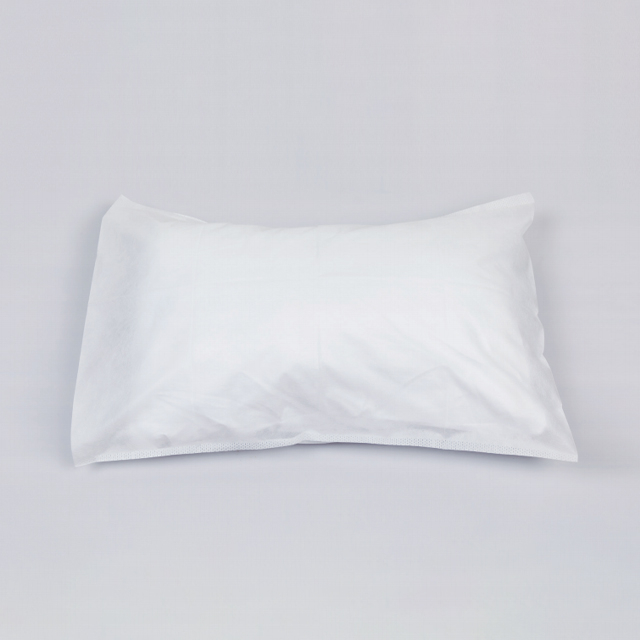
When healthcare procurement teams evaluate infection control products, the list usually starts with gloves, masks, gowns, and drapes. Pillows — and specifically the covers that protect them — rarely make the list. Yet pillows are among the most consistently contacted surfaces in any clinical environment. Every patient who lies down on a bed, stretcher, procedure table, or treatment chair brings their skin, hair, respiratory secretions, and bodily fluids into direct contact with the pillow surface. Without a disposable barrier, that pillow becomes a reservoir for pathogens until it is laundered or replaced.
Laundry is not instantaneous. In busy wards, soiled pillows may sit for hours before reaching the linen room, and even well-run laundry cycles cannot guarantee the elimination of all resilient organisms — including spore-forming bacteria and certain viruses. Disposable pillow covers solve this problem at the source: they create a single-use, fluid-resistant barrier that is discarded after each patient, eliminating the contamination window entirely.
This guide examines the clinical case for disposable pillow covers, the materials and designs available, and the procurement decisions that determine whether your facility gets maximum value from this often-overlooked product.
Where Disposable Pillow Covers Matter Most
Inpatient Wards and Emergency Departments
In general wards and emergency departments, patient turnover is rapid. Beds are reassigned multiple times per day, and each new patient introduces a fresh contamination risk. Standard hospital pillows — whether foam-filled or fibre-filled — absorb moisture, skin cells, and microorganisms through their fabric covers. Even with regular laundering, the pillow core itself can harbour bacteria and fungi over time. A disposable pillow cover placed over the standard pillow (or over a laundered pillowcase) provides an additional barrier that is changed with every patient, dramatically reducing the bioburden on the pillow itself.
For emergency departments, where patients may arrive with unknown infectious statuses, trauma-related bleeding, or heavy soiling, disposable pillow covers are a frontline defence. They allow clinical staff to quickly swap out contaminated pillow covers without removing the entire pillow from the bed — a critical time-saver during high-acuity admissions.
Operating Theatres and Procedure Rooms
During surgery, the patient's head is in a fixed position for extended periods. Surgical pillows and headrests must be protected from blood, irrigation fluids, antiseptic solutions, and skin debris. Disposable pillow covers designed for surgical use are typically made from fluid-resistant materials — often PP+PE laminated or SMS nonwoven — that prevent liquid penetration while maintaining enough breathability to avoid heat buildup during long procedures.
In dental and ophthalmology procedure rooms, where patients lie supine with their faces close to the pillow surface, a disposable cover protects against aerosolised droplets, saliva splatter, and eye irrigation runoff. These covers are often changed between every patient, making disposability a practical necessity.
Ambulance and Patient Transport
Ambulance stretchers and patient transport chairs carry patients of unknown health status in confined spaces. Pillows used during transport are exposed to the same contamination risks as inpatient pillows, but with the added challenge of limited onboard laundry facilities. Disposable pillow covers allow EMS crews to maintain a clean pillow surface between calls — simply peel off the used cover and replace it with a fresh one. This is particularly important for interfacility transfers involving infectious patients.
Long-Term Care and Nursing Homes
In long-term care settings, residents may use the same pillow for months or years. While residents' personal pillows reduce cross-contamination compared to shared institutional pillows, situations arise where pillows are shared — during respite care, rehabilitation transfers, or temporary room reassignments. Disposable pillow covers provide a cost-effective solution for these transitional periods, ensuring that pillows are protected even when they move between residents.
Additionally, for residents with incontinence, drooling, or wound drainage, disposable pillow covers protect the pillow from moisture damage and soiling, extending the life of the underlying pillow and reducing replacement costs.
"We introduced disposable pillow covers across our 300-bed facility during a seasonal infection surge. The infection control team reported a measurable drop in surface contamination on pillows, and the housekeeping staff appreciated not having to pull and replace soiled pillows during peak admissions." — Infection Control Nurse, Tier-2 City Hospital, Jiangsu Province
Materials and Performance
PP Nonwoven
Polypropylene nonwoven is the lightest and most economical option for disposable pillow covers. It is soft, breathable, and provides a basic barrier against dry contaminants such as skin flakes, hair, and dust. PP nonwoven covers are suitable for general ward use where fluid exposure is minimal and the primary goal is to prevent cross-contamination between patients during routine bed turnover.
PP+PE Laminated
Adding a polyethylene film layer to the PP nonwoven base creates a fluid-resistant barrier that protects against liquids — blood, saliva, irrigation fluids, and perspiration. PP+PE laminated covers are the most versatile choice for clinical environments, offering the softness and breathability of nonwoven on the patient-facing side while providing reliable moisture protection on the pillow side. These are recommended for emergency departments, procedure rooms, and any setting where fluid exposure is likely.
SMS (Spunbond-Meltblown-Spunbond)
SMS nonwoven adds a meltblown filter layer that enhances both fluid resistance and particle filtration. SMS pillow covers are the highest-performance disposable option and are appropriate for operating theatres, isolation wards, and environments where both liquid barriers and microbial filtration are required. SMS material is also stronger and more tear-resistant than standard PP nonwoven, making it suitable for longer procedures or heavier patients.
Polymer-Coated Fabric
Some disposable pillow covers use a thin polymer-coated fabric substrate that provides full waterproof protection. These are the most fluid-resistant option and are ideal for situations involving heavy soiling — such as trauma cases, post-surgical recovery with significant drainage, or incontinent patients. The trade-off is reduced breathability and a slightly less comfortable feel against the skin.
Closure Types and Fit
Envelope Closure
The envelope-style cover features an overlapping flap at the open end that tucks the pillow inside. This is the simplest and most cost-effective design, requiring no fasteners or adhesives. Envelope covers are quick to apply and remove, making them ideal for high-turnover environments. The main limitation is that the flap can shift open during use, potentially exposing the pillow surface — though this is rarely an issue when the cover is used over an existing pillowcase.
Elastic Band Closure
Covers with an elastic band around the opening provide a more secure fit that grips the pillow and prevents the cover from slipping or opening during use. Elastic-band covers are preferred for ambulance transport and patient transfer, where the pillow may be jostled or repositioned. They are also favoured in surgical settings where the cover must stay in place for the duration of the procedure.
Adhesive or Tie Closure
Some covers feature an adhesive strip or tie strings at the opening for a sealed closure. These provide the most secure fit but take slightly longer to apply and remove. They are most commonly used in operating theatres and isolation rooms where maintaining a complete barrier is critical.
Sizing Considerations
Hospital pillows come in a range of sizes and shapes — from standard rectangular bed pillows (approximately 50 × 70 cm or 20 × 27 inches) to smaller contoured pillows used in surgical and dental settings. Choosing the right size cover ensures adequate coverage without excess material that can bunch up and cause patient discomfort.
A practical approach is to standardise on two sizes: a standard size for general ward and inpatient use, and a smaller size for stretcher, procedure, and transport applications. Confirm the pillow dimensions in your facility before ordering, as pillow sizes vary by manufacturer and region.
Procurement Best Practices
- Map use cases to materials. Not every pillow needs a fluid-resistant cover. General wards can use PP nonwoven covers for routine patient turnover, while emergency departments and operating theatres should use PP+PE or SMS covers. Procuring the right material for each department avoids over-specifying (and over-spending) where it is not needed.
- Calculate true per-patient cost. A disposable pillow cover costs a fraction of a single laundry cycle — which includes water, energy, detergent, labour, and linen replacement for damaged pillows. When the full cost of laundering is accounted for, disposable covers are often more economical, especially in high-turnover departments.
- Stock individually wrapped covers for patient-facing use. Individually packaged covers are hygienic for bedside storage and quick access during admissions. Bulk-packed covers are suitable for pre-packaging by central supply or for use in areas where covers are dispensed by linen services.
- Test closure security under real conditions. Envelope covers are fast but may shift. Elastic covers are more secure but slightly slower to apply. Have nursing staff trial both types during actual bed turnover to determine which works best for your workflow.
- Plan for surge capacity. Infection outbreaks, seasonal admissions, and mass-casualty events can dramatically increase pillow cover consumption. Maintain a buffer stock of at least two weeks' supply above normal usage, and ensure your supplier can scale up delivery on short notice.
- Include pillow covers in infection audits. Surface contamination audits should include pillow testing — both with and without disposable covers — to demonstrate the protective value of covers and justify procurement budgets to facility management.
Common Mistakes to Avoid
- Assuming pillowcases are enough. Fabric pillowcases absorb fluids and pathogens just like the pillow itself. They require laundering between patients, which introduces a delay and a contamination window. A disposable cover placed over the pillowcase provides an immediate, single-use barrier.
- Using undersized covers. A cover that is too small will not fully enclose the pillow, leaving exposed areas that can harbour contaminants. Always measure your actual pillows and order covers with at least 2-3 cm of overlap on each dimension.
- Ignoring patient comfort. Some disposable materials feel plasticky or noisy when the patient moves. PP nonwoven and SMS covers are quieter and softer than fully plastic options. Where patient-facing comfort matters — such as in general wards — prioritise nonwoven or laminated covers over fully waterproof polymer covers.
- Forgetting about storage. Disposable pillow covers take up less space than spare pillows or pillowcases, but they still require organised storage at the point of use. Bedside cabinets, admission kits, and supply carts should all be stocked appropriately.
Sustainability Considerations
Like all single-use medical products, disposable pillow carries an environmental footprint. However, the sustainability calculus must account for the resources consumed by the alternative — laundering fabric pillowcases and pillows between every patient. Water, energy, detergent, and transportation for soiled linen all contribute to the environmental cost of reusable solutions.
Facilities looking to reduce the environmental impact of disposable pillow covers should consider:
- Specifying PP nonwoven or SMS covers, which are lighter and use less material than fully plastic alternatives.
- Working with suppliers who offer recycled-content or recyclable packaging for bulk orders.
- Using disposable covers selectively — reserving fluid-resistant covers for high-risk areas while using lighter nonwoven covers for general wards.
- Ensuring proper waste segregation so that non-contaminated covers can be routed to appropriate disposal streams rather than clinical waste incineration where not required.
Conclusion
Disposable pillow covers are a simple, cost-effective infection control measure that protects patients, extends pillow life, and reduces laundry burden. Whether for routine patient turnover in a general ward, fluid protection in an operating theatre, or contamination prevention during ambulance transport, the right disposable pillow cover provides a reliable barrier that fabric alone cannot match.
Newrise Medical manufactures disposable pillow covers in PP nonwoven, PP+PE laminated, and SMS materials, with envelope, elastic, and adhesive closure options. Produced in our ISO 13485 certified facility in Changzhou, China, in standard and custom sizes. Contact us for samples and pricing →