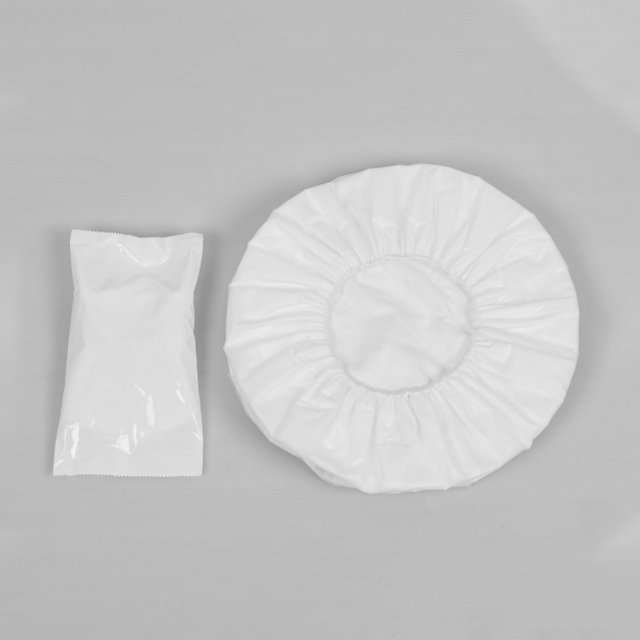
Every adult human scalp sheds approximately 1,000 skin particles per hour, and each particle can carry thousands of microorganisms. In an operating theatre, these airborne particles represent a significant source of surgical site contamination. In cleanrooms, they compromise particle-count certification. In food processing, they introduce biological hazards into production lines. The simplest and most effective intervention against this contamination pathway is the disposable bouffant cap.
Unlike traditional scrub caps — which are often reusable, require laundering, and may not fully cover the hair — disposable bouffant caps are designed to envelop the entire head, including hair and ears, in a single-use garment that is removed and discarded after each procedure, shift, or entry into a controlled environment. Their universal fit, low cost, and straightforward use make them one of the highest-volume disposable consumables in any healthcare or industrial hygiene programme.
Why Bouffant Caps Matter in Infection Control
Surgical site infections (SSIs) remain one of the most common healthcare-associated infections globally, affecting approximately 2 to 5 percent of surgical patients in developed countries and significantly more in resource-limited settings. Each SSI adds an average of 7 to 10 days to a patient's hospital stay and increases the risk of readmission, long-term complications, and mortality. Infection prevention protocols — including sterile attire, hand hygiene, environmental cleaning, and airborne contamination control — work together to reduce SSI rates.
Bouffant caps contribute to the airborne contamination control layer. While the clinical evidence on head coverings and SSI rates has been debated, the consensus among infection prevention professionals is that full hair coverage, including sideburns and the nape of the neck, is a prudent precaution. The World Health Organization's surgical safety guidelines and national infection control standards in most countries recommend or require hair covering for all personnel entering the operating theatre.
Beyond the operating room, bouffant caps serve critical roles in:
- Cleanrooms and pharmaceutical manufacturing. ISO 14644 cleanroom standards limit airborne particle concentrations. Personnel are the single largest source of particle generation in cleanrooms, and hair covering is mandatory in classified cleanroom environments (ISO Class 5 through ISO Class 8).
- Food processing and packaging. Food safety standards — including HACCP, BRCGS, and SQF — require that all personnel entering production areas wear effective hair restraints. Bouffant caps that fully contain hair, including facial hair, are the standard solution.
- Electronics manufacturing. Static-sensitive assembly areas and microelectronics production lines require personnel to wear hair covers that minimise particle shedding and, in some cases, provide antistatic properties.
- Dental clinics and veterinary practices. Any clinical setting where aerosol-generating procedures are performed benefits from hair covering to reduce contamination of the clinical environment.
Materials: Nonwoven vs CPE
Disposable bouffant caps are manufactured from two primary materials, each with distinct characteristics:
| Factor | Nonwoven (PP / SMS) | CPE (Chlorinated Polyethylene) |
|---|---|---|
| Material feel | Soft, fabric-like; comfortable for extended wear | Smooth, slightly crinkly; lighter weight feel |
| Breathability | Good — nonwoven structure allows air passage ✓ | Moderate — film structure is less breathable |
| Particle filtration | Good — SMS nonwoven offers multi-layer protection | Excellent — continuous film provides complete barrier |
| Lint generation | Very low (SMS grades) to low (standard PP) | Virtually zero — ideal for cleanrooms ✓ |
| Cost | Low — economical for high-volume use | Very low — typically the most affordable option |
| Fit and stretch | Good — conforms to head shape with elastic band | Good — elastic band provides secure fit |
| Colour options | Wide range — white, blue, green, pink, yellow, etc. | Limited — typically white, blue, or transparent |
| Typical use | Operating theatres, wards, general healthcare | Cleanrooms, food processing, electronics |
For most healthcare applications, nonwoven bouffant caps are the preferred choice due to their breathability and comfort during long surgical procedures. For cleanrooms and environments where zero lint is critical, CPE caps offer the best particle containment performance.
Size, Elastic, and Fit — The Details That Matter
A bouffant cap that is too small will slip off or leave hair exposed. One that is too large will sag and interfere with vision or other PPE. The quality of the elastic band is the single most important determinant of fit and user satisfaction. Here is what to look for:
Elastic Band Quality
The elastic band should be fully encased within the cap material — either sewn or thermally bonded — so that it does not directly contact the wearer's skin. Exposed elastic can cause discomfort, skin irritation, and allergic reactions, particularly during extended wear. The elastic should maintain its tension after multiple hours of use and should not lose elasticity when exposed to humidity or perspiration.
When evaluating samples, test the elastic by stretching it to its full extension and checking for:
- Recovery. Does the elastic return to its original shape after stretching? Poor-recovery elastic will loosen during a long shift, leaving the cap loose and hair exposed.
- Consistency. Is the elastic tension uniform around the entire circumference? Uneven elastic creates gaps where hair can escape.
- Encasement. Is the elastic fully covered by the cap material? Encased elastic is more comfortable and hygienic.
Diameter and Coverage
Standard bouffant caps range from 18 to 24 inches (45 to 60 cm) in diameter. The appropriate size depends on the target user population:
- 18–20 inch (45–50 cm). Suitable for average adult head sizes. The most commonly ordered size for general healthcare use.
- 21–24 inch (53–60 cm). Designed for users with larger head sizes, voluminous hair, or when additional coverage is desired (e.g., covering the ears and nape fully). Often preferred in food processing environments.
- Paediatric sizes. Smaller caps (15–17 inch / 38–43 cm) are available for children's hospitals and paediatric dental clinics.
For hospitals with diverse staff demographics, offering two sizes — standard and large — ensures adequate coverage for all users. Procurement teams should consult with nursing and surgical staff to determine the most appropriate size mix.
Colour Coding for Departmental Organisation
Many hospitals and facilities use colour-coded bouffant caps to differentiate departments, roles, or zones. This practice supports several operational goals:
- Rapid identification. In busy operating theatres or emergency departments, colour-coded caps allow quick visual identification of staff roles (surgeons, anaesthetists, scrub nurses, circulators).
- Zone control. Different colours can designate different zones within a facility (e.g., blue for clean zones, green for operating theatres, white for general wards). This reinforces infection control protocols and helps security or infection control officers verify compliance at a glance.
- Inventory management. Colour-coded stocks make it easy to track consumption by department and identify unusual usage patterns that may indicate waste, theft, or protocol non-compliance.
- Patient confidence. When patients see a team of healthcare workers in coordinated, colour-coded attire, it projects professionalism and attention to infection control standards.
Newrise Medical offers bouffant caps in white, blue, green, pink, yellow, and custom colours. Custom colours can be matched to a hospital's branding or existing PPE palette.
Bouffant Caps vs Surgical Hood vs Scrub Cap
Healthcare facilities have several options for head covering. Understanding the differences helps ensure the right choice for each setting:
| Feature | Bouffant Cap | Surgical Hood | Scrub Cap |
|---|---|---|---|
| Coverage | Full head, hair, and ears ✓ | Full head plus neck and shoulders | Top of head only (may leave hair exposed) |
| Reusability | Single use | Single use or reusable | Typically reusable (laundered) |
| Fit | Universal — elastic band | Universal — elastic or tie | Sized — tie-back or fitted |
| Infection control | High — single use, full coverage ✓ | Highest — extended coverage | Moderate — reusable, partial coverage |
| Cost per use | Very low | Low to moderate | Moderate (includes laundering cost) |
| Best for | General OR, wards, cleanrooms, food processing | Orthopaedic and implant surgery | Low-risk clinical settings, staff preference |
For most surgical and clinical applications, bouffant caps offer the best balance of coverage, cost, and convenience. Surgical hoods provide extended coverage for high-risk procedures such as orthopaedic and joint replacement surgery, where the consequences of contamination are most severe. Scrub caps, while popular for their aesthetic appeal and personalisation options, provide less complete coverage and introduce laundering costs and infection control considerations.
Quality Indicators When Sourcing Bouffant Caps
At first glance, all bouffant caps look the same. In practice, quality varies significantly. When evaluating suppliers, consider the following:
- Material weight (GSM). Nonwoven bouffant caps typically range from 10 to 20 gsm (grams per square metre). Heavier nonwoven (15–20 gsm) offers better durability and particle containment. For food processing and cleanrooms where cost is the primary driver, lighter grades (10–12 gsm) may be sufficient.
- Elastic type and width. Wider elastic bands (4–6 mm) distribute pressure more evenly and are more comfortable for extended wear. Narrow elastic (2–3 mm) is cheaper but may dig into the skin and cause discomfort during long procedures.
- Manufacturing method. Thermally bonded caps (no sewing) are preferred for cleanroom use because they generate no lint from stitching threads. Sewn caps are acceptable for general healthcare use and may offer slightly better elastic security.
- Packaging. Individually wrapped caps offer the highest hygiene level and are preferred for operating theatres. Bulk-packed caps (100 per bag) are more economical and suitable for high-consumption settings like food processing plants.
- Shelf life and storage. Nonwoven bouffant caps have a shelf life of 2–3 years when stored in a cool, dry environment. CPE caps may have a slightly shorter shelf life due to material degradation. Ensure that packaging includes manufacture and expiry dates.
- Certifications. For healthcare use, look for manufacturers with ISO 13485 certification. For cleanroom use, confirm that the caps are tested for particle emission and meet the relevant ISO 14644 class requirements.
Consumption Planning and Ordering
Bouffant caps are high-turnover consumables. A medium-sized hospital with 200 operating theatre procedures per month may use 600 to 1,000 caps monthly (accounting for multiple cap changes per procedure — pre-op, intra-op, and post-op). Adding ward use, outpatient procedures, and cleanroom applications, total monthly consumption can easily reach 3,000 to 5,000 caps.
Key planning considerations:
- Par level. Maintain at least one month's supply in stock, plus a safety buffer of 25 percent for unexpected demand spikes.
- Mixed sizes. Order a mix of standard and large sizes based on staff head-size distribution. A typical ratio is 70 percent standard to 30 percent large, but this varies by region and demographics.
- Colour variety. If using colour coding, ensure that all required colours are available in sufficient quantities. Running out of a designated colour for a specific department disrupts the colour-coding system.
- Consolidated ordering. Bouffant caps can be ordered alongside other disposable consumables (gloves, masks, gowns, shoe covers) to reduce shipping costs and simplify procurement administration.
Industry Trends — Head Covering Standards in 2026
Several developments are shaping the bouffant cap market:
- Re-evaluation of head-covering protocols. Some healthcare systems have moved from mandatory bouffant caps for all OR personnel to optional scrub caps, based on studies showing limited evidence linking head coverings to SSI rates. However, the majority of infection control guidelines continue to recommend or require full hair coverage, particularly for high-risk procedures.
- Sustainability pressure. Healthcare facilities are increasingly scrutinising the environmental impact of single-use consumables. Some manufacturers are exploring biodegradable nonwoven materials (PLA-based) for bouffant caps, though these are not yet widely available at competitive prices. Procurement teams should watch this space as sustainable options mature.
- Expanded cleanroom demand. Growth in pharmaceutical manufacturing, cell and gene therapy production, and semiconductor fabrication is driving increased demand for cleanroom-grade hair covers. CPE bouffant caps, with their zero-lint profile, are the preferred choice for these applications.
- Custom branding. Hospitals and healthcare systems are increasingly ordering custom-coloured and custom-branded bouffant caps as part of their professional appearance and infection control communication strategy.
"We switched to colour-coded bouffant caps across our surgical departments last year. The impact was immediate — infection control officers can now verify compliance from the corridor, and staff take more pride in their appearance. The cost difference was negligible, but the operational benefits were significant." — OR Manager, Provincial Hospital, Jiangsu
Conclusion
Disposable bouffant caps are a small consumable with an outsized impact on contamination control. Whether in the operating theatre, the cleanroom, or the food processing line, they are the first barrier between the human body and the controlled environment. Getting the details right — material selection, elastic quality, sizing, colour coding, and supply chain reliability — ensures that this barrier is effective, comfortable, and consistently available.
Newrise Medical manufactures disposable bouffant caps in nonwoven (PP and SMS) and CPE materials, in sizes from 18 to 24 inches and a range of colours. Produced in our ISO 13485 certified facility in Changzhou, China, with custom colours, packaging, and OEM options available. Contact us for samples and pricing →